
Reviewed by Yaquelin Vazquez, BCBA
Thanksgiving with an Autistic Child: Managing Crowds, New Foods and Family Expectations
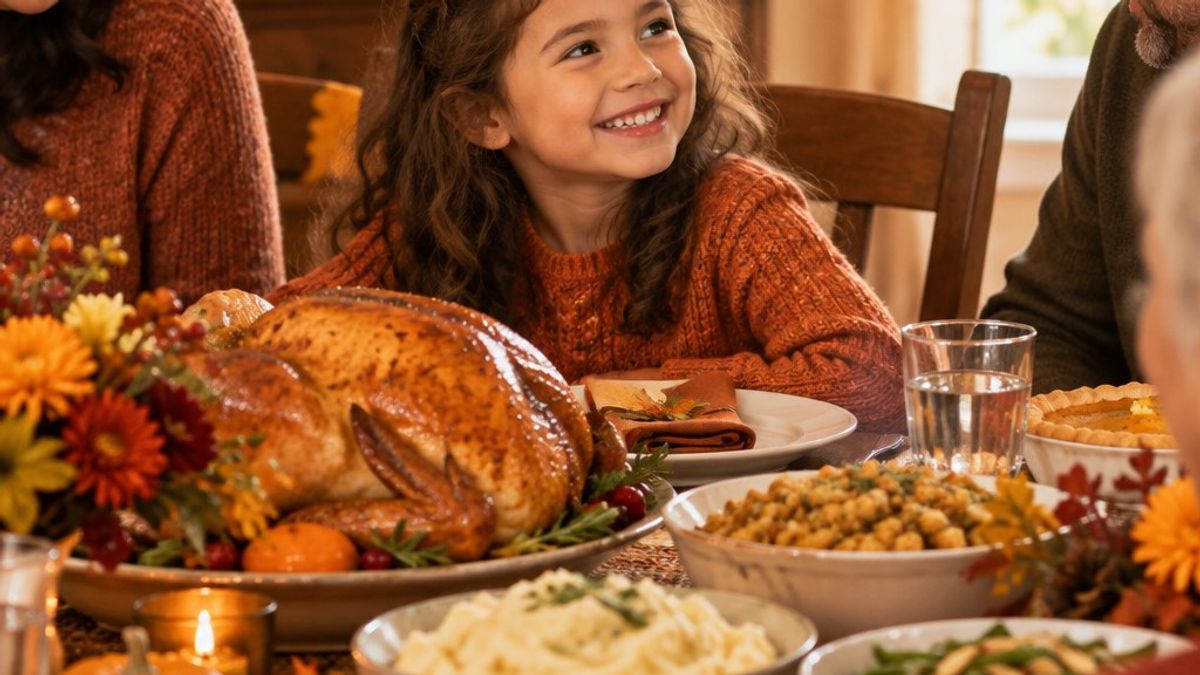
Thanksgiving brings family, food and tradition, but it can also bring crowds, noise, unfamiliar dishes and a long day without the usual routine. For many autistic children, that adds up fast. A little planning can help your child, and you, enjoy the day more.
Prepare your child ahead of time
Surprises are often the hardest part. In the days before, talk about what will happen: where you are going, who will be there, and what the day will look like. A simple visual schedule or short social story with photos of the house and relatives can make the day feel more predictable. Practice greetings, too, and let your child know a wave or a high five is fine instead of a hug.
Managing crowds and noise
- Arrive early, before the house fills up, so your child can settle in gradually.
- Ask the host for a quiet room your child can use as a calm-down space, and show it to them when you arrive.
- Pack comfort items: headphones, a favorite toy, a tablet or a fidget.
- Agree on a simple signal your child can use when they need a break, and honor it right away.
- Plan your exit. Leaving early on a good note is a success, not a failure.
New foods without the pressure
A holiday meal is not the time to push new foods. Bring a few dishes your child already eats so there is always something safe on the plate. If your child wants to explore, let them look at, touch or smell a new food without having to taste it. Praise any small step. Many children do better eating a little before the big meal so they are not too hungry, or sitting at the table for a short, agreed-upon time.
Setting family expectations
Relatives usually want to help but may not know how. A short message or call before the holiday can prevent hurt feelings on the day. You might share:
- How your child prefers to greet people, and that it's okay if they don't want to be hugged.
- That your child may eat different foods or leave the table early.
- What helps if your child gets upset, and what doesn't, such as crowding around them.
- One or two things your child loves, so relatives have an easy way to connect.
Grandparents in particular may have grown up with different ideas about behavior. Patient, specific explanations go a long way toward helping them understand your child.
Take care of yourself, too
You don't have to do everything. It's okay to skip a tradition, host a smaller gathering, or start a new one that fits your family. Share the load with a partner or trusted relative so you get a break, too.
Ask your child's BCBA for help
If your child is in ABA therapy, talk with their BCBA before the holiday. They can help you build a visual schedule, practice greetings or waiting at the table, and plan how to handle hard moments. If you'd like to learn more about ABA therapy for your child, call us at (954) 708-1661 or visit our Get Started page.